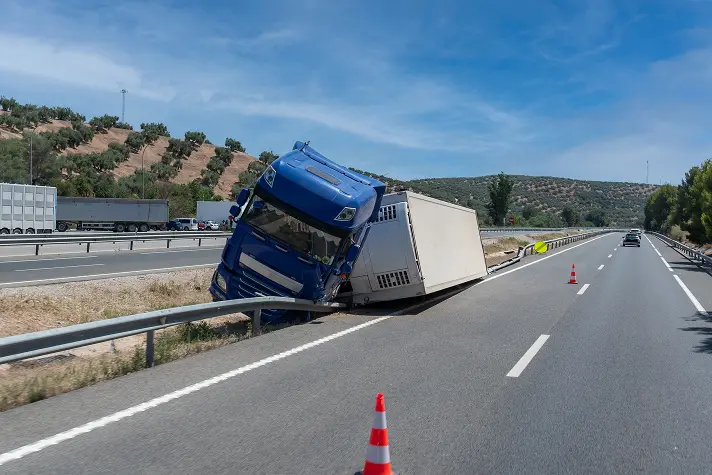
Commercial trucks can make crashes far more catastrophic than typical car accidents. So if you’ve been involved in an accident involving a commercial truck, you need the assistance of an experienced accident attorney to make sure you recover the full extent of whatever damages you are entitled to.
With major freight corridors running through Oregon and Washington, we see a significant volume of commercial truck traffic every day. Unfortunately, this also means truck accidents are a common occurrence throughout the region, particularly along mountain passes, in congested urban areas, and on rural highways.
The injuries sustained from these collisions are often severe and permanently life-altering, which is why having the right legal representation is critical. And if you’re a truck driver who was injured by another driver’s negligence while working, you also have important legal rights that require careful navigation.
In addition to state laws, there are many federal regulations that govern the trucking industry. The Federal Motor Carrier Safety Administration (FMCSA) establishes comprehensive rules covering driver qualifications, hours-of-service limits, cargo securement standards, and mandatory vehicle maintenance requirements. These additional regulations can, in some instances, provide additional avenues to recover funds in a case. Any violation of these federal standards can serve as powerful evidence of negligence in a claim.
There can also be short deadlines to preserve this evidence. Electronic logging device (ELD) data, black box recordings, and driver qualification files must be secured quickly before they are overwritten or destroyed. Insurance companies may also send their own investigators to begin gathering facts to help minimize their liability.
Steps to Take After a Truck Accident
Seek medical attention. Your health and safety are the top priority, and some injuries may not be immediately apparent. Medical records also serve as crucial documentation for your case.
Document the scene. If possible, take photos of the accident scene, your injuries, damage to your vehicle, skid marks on the road, road conditions, and traffic signs.
Gather information. Collect the driver’s name, CDL number, trucking company name, insurance information, and contact information for any witnesses.
Report the accident. File a police report and provide as much information as possible. Request a copy of the report for your records.
Preserve evidence. Keep all medical records, receipts, and documentation related to your accident and injuries.
Avoid settlements. Insurance adjusters may contact you quickly to try to minimize your claim. Do not provide recorded statements or accept any settlement offers without consulting an attorney.
Contact an attorney. The sooner you contact an experienced truck accident lawyer, the better your chances of building a strong case and preserving critical evidence.
Truck Accident Injuries: What to Look For
Truck accident victims often sustain catastrophic injuries that require extensive medical treatment and long-term care. The most common serious injuries include: spinal cord, internal, soft tissue, and traumatic brain injuries, along with fractures, burns, and lacerations.
Some injuries may not be immediately apparent, which is why seeking medical attention after any truck accident is essential: both for your health and for documenting your injuries for your legal claim.
Encouraging or ignoring hours-of-service violations
Cargo Issues:
Improperly loaded or secured cargo
Overloaded trailers
Shifting loads causing loss of control
Regulatory Violations:
FMCSA compliance failures
Falsified logs or records
Operating without proper licensing or insurance
Third Party Negligence:
Passenger vehicles cutting off trucks or merging unsafely
Cars driving in truck blind spots
Distracted or impaired motorists causing collisions with commercial vehicles
Sudden stops or erratic driving near large trucks
Where Truck Accidents Most Commonly Occur in Oregon & Washington
Interstate 5
Interstate 84
Interstate 90
Highway 26
Mountain Passes
Urban Areas (around Portland, Seattle, Tacoma, and Spokane)
Schedule a Free Appointment!
Our appointments are free until you file and your concerns are addressed!
Legal Consultation
"*" indicates required fields
What Goes Into a Case
There are important questions to answer in a trucking accident, including:
Who Bears the Liability?
Multiple parties can be held liable for a truck accident, and a thorough investigation is essential to identify everyone responsible for your injuries, such as: the trucking company, manufacturer of the truck, company that loaded the cargo, vehicle owner, maintenance providers, and third-party drivers.
An experienced commercial trucking attorney can help you explore these other avenues and make sure all responsible parties are held accountable.
What Was the State of the Driver?
An investigator will carefully examine the driver’s actions and duties, credentials and training, and their physical and mental state. Drivers are required to undergo a drug test immediately following an accident. What were the results of that test?
What Will the Driver’s Logs Show?
Driver fatigue is a major cause of trucking accidents. Federal driving regulations require drivers to stop for various reasons, such as for taking breaks and to ensure the load has not shifted after the journey has begun.
The driver’s logs (now usually maintained through electronic logging devices (ELDs)) will be reviewed to confirm that federal and state laws regarding driving times and rest periods were adhered to.
Did the driver make the necessary stops after starting their trip? Hours-of-service violations are common and can be compelling evidence of negligence.
What Was the State of the Vehicle?
The investigation will also include reviewing the records for maintenance, inspections, testing, and loading of the truck. This includes:
Pre-trip and post-trip inspection reports
Maintenance and repair records
DOT inspection history
Black box data
Cargo weight and securement documentation
Investigate Requirements for Different Types of Trucks
Semi-trucks and tractor trailers require a view of coupling mechanisms, trailer maintenance records, and cargo securement compliance.
Tanker truck investigations must consider liquid surge dynamics, hazardous material regulations (HAZMAT), and specialized training requirements.
Delivery trucks often involve time pressure from companies, frequent stops, and drivers unfamiliar with residential or urban routes.
Dump truck examinations focus on load weight compliance, raised bed accidents, and debris-related incidents.
Concrete mixer trucks require examination of load distribution and rollover risks.
Flatbed trucks have their cargo securement examined.
Box truck investigations focus on training records and company hiring practices.
For Injured Truck Drivers: Third-Party Negligence and Workers’ Compensation Claims
In many cases we’ve seen, truck drivers are injured on the job due to the negligence of other motorists. This can range from cars cutting them off, distracted drivers failing to yield, or reckless behavior that leaves the truck driver with no way to avoid a collision. When a truck driver is injured while on the job, the case often involves two separate but interconnected legal processes: a workers’ compensation claim and a third-party negligence claim.
Because you were working at the time of the accident, you are likely entitled to workers’ compensation benefits through your employer. However, when your employer’s workers’ comp insurance pays for your medical treatment and wage loss benefits, they might have a legal right to be reimbursed from any settlement or verdict you receive from the third-party negligence claim. This is called a lien.
Without experienced legal representation, you could end up with a settlement that goes almost entirely to repaying the workers’ comp amount.
But when another driver caused your accident, you have the right to pursue a separate personal injury claim against that at-fault party. This third-party claim allows you to recover compensation that workers’ compensation does not provide, such as full lost wages, pain and suffering, emotional distress, and future earning capacity.
So if you’re a truck driver injured by another driver’s negligence, don’t assume that workers’ compensation is your only option.
Representation You Deserve in Oregon & Washington
If you have been involved in a trucking accident, you need the assistance of experienced truck accident lawyers who understand the complexities of these cases.
There are also some short deadlines that can make it difficult to obtain all of the information you need. Evidence can disappear, memories fade, and trucking companies work quickly to protect their interests.
So contact OlsenDaines today to schedule your free consultation with an experienced commercial trucking attorney. We have 46 years of experience representing clients in trucking accident cases, and we’re ready to fight for the full compensation you deserve.


 Commercial trucks can make crashes far more catastrophic than typical car accidents. So if you’ve been involved in an accident involving a commercial truck, you need the assistance of an experienced accident attorney to make sure you recover the full extent of whatever damages you are entitled to.