 In Oregon and Washington, certain post-accident scenarios leave very little room for doubt, while others create more of a gray area. If your situation involves injuries, disputed fault, early lowball insurance offers, or complex multiple-vehicle and commercial incidents, you really should call an experienced car accident lawyer immediately for a consultation.
Key Takeaways:
- Minor accidents with zero physical harm and clear liability can often be handled independently without a legal team, whereas major accidents or complex accidents with injuries, disputed versions of events, or hardball negotiating tactics require the expertise of an attorney.
- Postponing legal action or delaying medical care allows insurance companies to contest the cause and severity of your injuries.
- Contacting an attorney immediately protects critical physical evidence, secures reliable witness statements, and ensures compliance with strict statutory deadlines.
You may be sitting on the side of the road, in a hospital waiting room, or at home nursing an injury, wondering what to do next. Your mind is racing with immediate questions: How will I pay these bills? Who handles the damage to my car? Should I call a car accident lawyer right now, or handle this myself?
When you have just been involved in a collision, the legal and insurance processes can feel overwhelming fast. Deciding whether to hire an auto accident attorney comes down to evaluating a few critical details about your crash. This guide provides a clear decision-making framework to help Oregon and Washington drivers determine if, when, and why you should call a car accident lawyer to protect your rights and your recovery.
When You Should Call a Car Accident Lawyer Right Away
- If There Are Injuries: Medical treatments, emergency room visits, physical therapy, and missed work quickly stack up into thousands of dollars. An attorney protects you from absorbing these costs out of pocket.
- If Fault Is Disputed or Unclear: If the other driver denies responsibility, shifts blame onto you, or provides a conflicting story to law enforcement, you need a legal team to investigate and establish liability.
- If You Face Challenges with Insurance Companies: Insurance adjusters often reach out within days of a crash with a quick settlement offer. These early offers rarely cover long-term medical needs or future lost wages.
- If the Collision Involved Commercial or Specialized Vehicles: Crashes involving semi-trucks, delivery vans, rideshare vehicles, or government property involve complex corporate insurance policies and federal regulations that demand legal experience.
- If More Than Two Vehicles or Parties Were Involved: Chain-reaction pileups on major highways like I-5 or I-84 create tangled webs of liability across several insurance carriers.
Schedule a Free Appointment!
Our appointments are free until you file and your concerns are addressed!When an Attorney May Not Be Necessary (and the Gray Areas in Between)
Not every fender bender requires a legal team. If you were involved in a low-speed parking lot bump with zero physical injuries, minor property damage, and clear fault accepted by the other driver’s insurer, you can generally navigate the claims process independently.
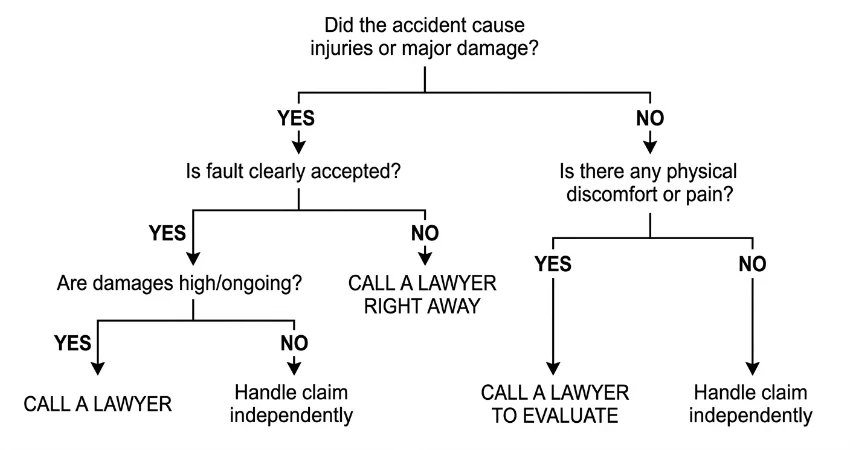
However, many accidents fall squarely into a gray area where small details make a massive difference. Use the simple decision flowchart below to quickly determine whether your situation requires immediate legal representation, professional evaluation, or independent handling:
What Are Some Examples of “Gray Areas”?
- Delayed Pain: Soft-tissue injuries, whiplash, and mild traumatic brain injuries often do not show symptoms until 48 to 72 hours after the initial shock wears off.
- Shared Fault: Oregon and Washington operate under specific comparative fault rules. If the insurance adjuster claims you share even 10% or 20% of the blame, your final payout can be drastically reduced.
- Uninsured or Underinsured Drivers: If the driver who hit you lacks sufficient coverage, you must navigate your own policy’s UM/UIM benefits, which can put your interests directly at odds with your own insurer.
Does It Matter How Soon After an Accident You Contact a Lawyer?
Yes. If you plan to consult an attorney, calling them immediately after the crash is one of the most critical steps you can take.
One of the most common mistakes injured drivers make is waiting to see if a “minor” pain resolves on its own. Rationalizing that a sore neck or back will naturally heal often leads to months of delayed treatment. When the pain persists and you eventually decide to seek legal help, the gap in medical treatment creates a major hurdle. Insurance companies will argue that your injuries were caused by something else or were not severe enough to warrant compensation.
Acting Immediately Protects Your Case. Here’s How
- Preserving Evidence: Skid marks fade, traffic camera footage gets overwritten, and crash debris gets cleared away within days. Prompt investigation keeps crucial proof intact.
- Witness Recollection: Statements from eyewitnesses are most accurate and reliable while memory of the collision is fresh.
- Protection from Adjuster Tactics: Insurance adjusters are trained to record statements that minimize your payout. Having an attorney step in right away stops unfair questioning.
- Statute of Limitations: Both Oregon and Washington set strict legal deadlines for filing personal injury claims. Early preparation ensures all filing requirements are met well in advance.
FAQs About What to Expect After a Car Accident in OR & WA
Why Work with the Auto Accident Lawyers at OlsenDaines?
Navigating the aftermath of a collision in Oregon & Washington can feel like stepping into a confusing system designed to work against you. Think of our team of auto accident attorneys as your experienced guide – we know the path toward a successful resolution, and we help you understand every step of the process.
| How We Protect Your Claim | What This Means for You |
| Handling Insurance Companies | We manage all calls, paperwork, and aggressive negotiation tactics so you can focus on healing. |
| Determining & Proving Liability | We analyze police reports, gather physical evidence, and establish clear fault to strengthen your foundation. |
| Maximizing Full Compensation | We calculate both present medical bills and future losses, including pain, suffering, and emotional distress. |
| Access to Expert Resources | We partner with medical specialists and accident reconstruction experts to build undeniable proof. |
| Representation in Court | If insurers refuse to pay a fair settlement, our trial attorneys present your case directly to a judge or jury. |
| No Upfront Costs | We operate on a contingency fee structure: you pay zero legal fees unless we win your case. |
Speak with an Experienced Oregon & Washington Auto Accident Lawyer Today
Partnering with a personal injury attorney with a proven record in auto accident cases shifts the balance of power back to you. Experienced legal representation dramatically increases your likelihood of a successful claim outcome, ensuring your physical injuries, lost income, and personal suffering are fully recognized and compensated.
Take control of your recovery and demand the justice you deserve. Contact OlsenDaines today for a free, zero-obligation consultation. We operate on a contingency fee model—you pay no legal fees unless we successfully win your case.